A European Starlink
2. 8. 2022
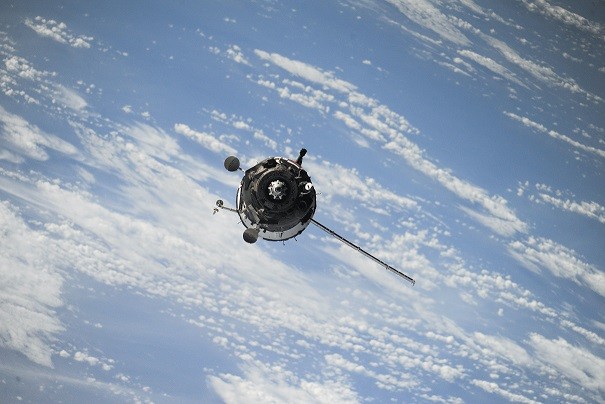
When people hear "satellite internet", the vast majority immediately think of Elon Musk's grand project called Starlink. The truth is, however, that the European Union has for some time been preparing a similar undertaking, not only for its member states. With support from European funds, an extensive network of satellites is to be created, providing high-speed internet connections for Europe.
A grand investment
During the first half of this year, the European Commission issued an official report stating that it plans to invest almost EUR 2.5 billion over the next five years in building a sophisticated, reliable and secure system of its own satellite internet. The primary consumers should naturally be the residents of the European Union's member states, but internet from European satellites should also cover part of Africa or, for example, the Arctic. In addition to European Union funds, the satellite internet project will also be supported by a number of other European sources, both public and private. However, providing internet connections will not be the only purpose of the satellite system in question. It is also intended to contribute to significantly better protection of important data and to secure the European Union's communication traffic against possible cyber attacks from outside. The total cost of this ambitious project has been preliminarily estimated at EUR 6 billion, which converts to an estimated CZK 146 billion.
TIP: Providing fibre internet is often so costly or impossible that, despite the price of satellite internet, this option is the only possible solution for some people. Also read the article Challenges of building fibre networks in the Czech Republic to find out more about this.
Secure European satellites
At present, the European Union operates several hundred satellites. These serve, for example, for meteorological services or navigation systems, but according to experts they are not very secure. The EU has therefore decided that it wants to build a new, safer and multi-purpose satellite system in the foreseeable future, one that would meet current cyber security requirements. Similarly to Elon Musk's Starlink project, the future system in question is also to provide, among other things, high-speed internet connections in areas where infrastructure does not allow them to be introduced in the usual way. The European Union has so far reserved the following five years for completing the entire project.
Internet for everyone and Europe as a digital power
In connection with the European satellite internet project, European Commissioner for the Internal Market Thierry Breton stated that space is of considerable importance for economic growth, security and the geopolitical position not only of European countries. He also pointed out that, despite general progress, only 56% of all European households currently have access to high-speed internet. Unlike Elon Musk, who keeps sending ever more new satellites into space as part of his Starlink project, the European Union plans to use rather a smaller number of satellites, but according to its representatives it intends to use them more efficiently by combining low and medium orbits.
A secure Europe
As we have already mentioned, the newly built satellite system is to provide, in addition to high-speed internet connections, more secure diplomatic and intelligence communication and navigation. The last of these is already provided by the Galileo navigation system, but in view of current events in particular, security in this area also needs to be strengthened. The satellite internet project should also bring significant benefits to science and industry. According to European Commissioner Thierry Breton, work on developing the system could begin as early as next year. If everything goes to plan, the European satellite system should be ready for use in 2028. At present, however, the entire proposal is still under discussion.
Are you looking into a better internet connection? Visit the page Internet provider by address
Updated 20 March 2024