Official internet speed measurement – 2024
23. 1. 2024
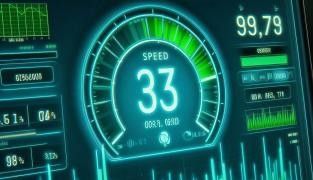
In today’s world, when the digital world is becoming an ever more integral part of our lives, a good, fast internet connection is the key to the smooth running of everyday activities. An official internet speed measurement has become an essential tool for providers and users who want to optimise their online experience. Where, and above all how, can you carry out an official measurement of your internet?
How to measure speed correctly?
First of all, choose a suitable device. Measuring speed on a mobile over wi-fi is wrong, because you would get a completely irrelevant result that does not reflect reality, and the speed could easily be 90% lower. So measure your speed on a device that is connected to the router by cable, and make sure no other device in the household is using up the connection.
TIP: If you call any internet provider and say that you are measuring a lower speed, the operator’s first question will be “Are you measuring by cable or wi-fi?” Read What to look out for when buying a wireless router.
Why measuring speed matters
Measuring internet speed is not just a statistic; it is a key element for providers and end users alike. The speed of your connection affects our ability to stream videos, work from home and communicate online.
TIP: Not sure what speed to ask your provider for? Read the article https://nejpripojeni.cz/clanky/bezna-rychlost-internetu/
Where to measure internet speed officially?
To date, it still happens that on some provider and retailer websites you measure different speeds. The reason is that different servers are used for the measurement, or that speed testers cannot cope with higher speeds. Another possibility is that, after a low measured value, you are offered the services of a competing connection. So in 2021, the Czech Telecommunication Office (CTU) launched the first official speed test, which you will find at https://nettest.cz/cs/Test
What speed are you entitled to by law?
Maximum (100%) / advertised speed – this is the speed that is actually attainable, although you may not reach it at peak times. On fibre connections, however, this is usually the standard at any time. Fibre can provide “almost unlimited speed”.
Commonly available (60%) – this is the speed that you should measure for most (95%) of the time. Its value should not drop lower. You should expect this more on wireless connections (antenna on the roof).
Minimum (30%) – this is the lowest speed you should measure. This can happen in 5% of cases. If the speed falls below 30%, you can officially complain that the service is faulty.
Author: Lukáš Pecina, 23 January 2024