What are cookies and how to block them
25. 1. 2024
We have long since entered the digital age, where we routinely come across the term "cookies". No, I don't mean sweet pastries. Cookies are small text files that websites save on our devices during our first visit. What is their story, and how should we deal with them? In this article I will explain what cookies are and how to block them.

How cookies came about
Cookies date back to the 1990s, when engineers at Netscape were looking for a way to store information about users' preferences. And so cookies were born, becoming key players in the personalisation of online experiences. But once we start to feel the need to control our data, it is time to ask ourselves: how do we block them?
TIP: You can also find general information about cookies in the article What are cookies and why you should not share them with third parties.
Types of cookies
Cookies come in many different kinds, and each one has its own role. The most common are session cookies, which expire when you finish visiting a page, and persistent cookies, which stay on your device for longer. Tracking cookies follow our activity online and make it possible to create personalised content. If we want to limit their influence, we need to understand which cookies are out there and how they work.
How to block cookies
If you feel uncomfortable at the thought of your online steps being tracked, there are ways to boost your digital privacy. Modern web browsers offer options for managing cookies. In the settings we can choose which cookies to allow and which to block. Alternatively, you can use special extensions or apps to actively manage your digital footprint.
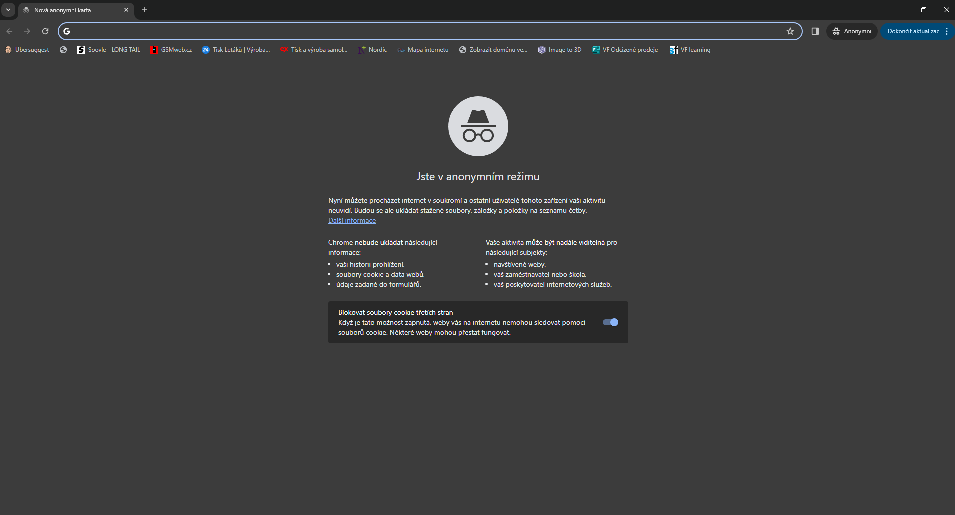
If you use Chrome, go to Settings > Privacy and security > Third-party cookies. Another option is to always use an Incognito window for one-off browsing.
TIP: You can open an Incognito window with the shortcut Ctrl + Shift + n. If you have a Mac, use the shortcut ⌘ + Shift + n.
GDPR and cookies
From 1 January 2022, the use of a GDPR cookie banner is mandatory in the Czech Republic. Every website owner who wants to avoid possible fines must install one. This obligation applies to everyone who uses cookies on their website or e-shop. We wrote more about this in the article GDPR - Personal data protection and security.
Author: Lukáš Pecina, NejPřipojení.cz, 25 January 2024
You might also be interested in


3. 9. 2026
How the internet works: what happens between pressing Enter and a loaded page
Whole article








22. 5. 2020