What is a VPN, why get one and what are its benefits?
30. 1. 2024
In today's digital age we spend more and more time online, so the importance of privacy and security on the internet is growing. A VPN (virtual private network) has become a key tool for securing our personal data, ensuring a secure connection and anonymous browsing. You may have heard of VPNs before, but you may still not know how they could benefit you. In the following article I will explain exactly what a VPN is and how it works. You will be able to understand why it is worth choosing an encrypted connection and what specific benefits this technology brings you.

What is a VPN?
VPN, which is short for virtual private network, is a technology that enables a secure and encrypted connection between your device and the internet. This protects all data sent and received within this network from unauthorised access and spying. The principle behind a VPN is that your internet data passes through a VPN server, which assigns you a new IP address, thereby hiding your real location and identity.
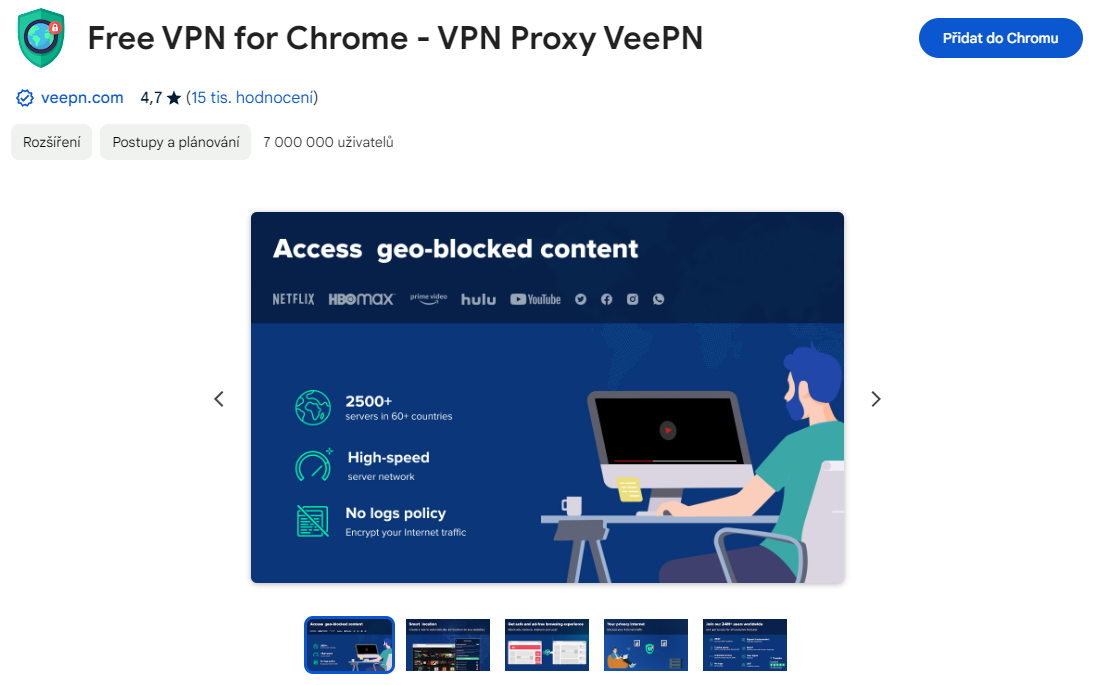
TIP: Free add-on for VPN functionality - Free VPN for Chrome - VPN Proxy VeePN
Why was the VPN created?
The virtual private network (VPN) came about because of the growing need to ensure secure and private use of the internet, which has become an integral part of our everyday lives. As this need grew with work and online communication, the idea of creating a technology that would enable users to connect to the internet securely and in encrypted form took hold. A virtual private network was created with this goal in mind.
TIP: Caution is important on the internet. Also read How to create a secure password? The most common mistakes you (probably) make too
Initially, the VPN was designed with the needs of businesses in mind, which needed to secure remote access for their employees. In this way, employees could connect to the company's private network from anywhere, and that private network made sure that sensitive data remained protected. Nowadays, employees often work away from the office, using public Wi-Fi networks in cafés, airports or on public transport. This situation carries a higher risk of sensitive information being leaked, which is why it is crucial for them to secure their remote connection with a VPN. If you often connect to public networks, read Security on a public Wi-Fi hotspot that can't be secure.
Why get a VPN and what are its (dis)advantages?
A VPN brings many benefits that can significantly improve your security when using the internet. Decide whether an encrypted connection is essential for you, and let's now take a closer look at the key advantages that virtual private networks provide.
-
Privacy on the internet:
- A VPN encrypts your internet connection, hides your location and prevents others from monitoring your online activity. This gives you what is known as net neutrality.
-
Secure connection on public networks:
- When connecting to public Wi-Fi hotspots, your data is vulnerable to hacker attacks. A VPN ensures a secure connection even on these public networks.
-
Protection of personal data:
- A VPN hides your real IP address and replaces it with a new one, which prevents your location and online activity from being tracked.
-
Remote access to company networks:
- For employees on the road or working from home, a VPN enables secure remote access to company networks and data.
-
Secure file sharing:
- When you need to share sensitive files, a VPN ensures a secure transfer and protects them from unauthorised access.
-
Protection against cyber threats:
- High-quality VPN providers can offer additional protection against cyber attacks and malware. However, it is important to be aware that a VPN on its own is not designed to automatically block fraudulent websites or protect against phishing. For that, a comprehensive security solution, such as antivirus software, is needed.
-
Secure online payments:
- When shopping online or carrying out banking transactions, a VPN encrypts the data being transferred and protects against potential threats. Again, to protect against fraudulent websites, it is advisable to combine a VPN with a security solution, such as antivirus software.
Disadvantages
Even though a virtual private network (VPN) offers many benefits and is a useful tool for protecting privacy and security on the internet, there are also aspects to watch out for. Before deciding to get a VPN, it is key to consider the following:
-
Reduced connection speed:
- Using a VPN may slow down your internet connection. This is because your data has to pass through a remote VPN server, which can cause some delay.
-
Limited choice of servers:
- Some services may offer a limited choice of servers to choose from. This may affect your flexibility and your ability to select the optimal server for your needs.
-
Paid services:
- Some VPN services require regular payments. This may be disadvantageous for users who prefer free solutions. It is important to weigh up the costs and benefits carefully before choosing a particular service.
-
Reliability and security:
- Some VPN services may not be sufficiently reliable or secure. When choosing, it is essential to prefer trustworthy, verified providers. Insufficient reliability or security may compromise the effectiveness of the VPN and endanger the security of your data.
Carefully considering these factors will help you choose the VPN service that best suits your needs, while minimising any possible disadvantages of using it.
TIP: Do you know how to find out the IP address of someone else's computer? :)
Author: Lukáš Pecina, NejPřipojení.cz
You might also be interested in

9. 9. 2026
Two-factor authentication: the safeguard that works even if someone steals your password
Whole article






22. 5. 2020