Challenges of building fibre networks in the Czech Republic
12. 12. 2023
No one doubts that an internet connection has become a fundamental pillar of the economic and social development of everyday society. However, compared with other basic networks such as electricity, water supply and sewerage, the construction of digital networks is left to be financed by private companies. This is certainly correct, but it brings disadvantages for municipalities or parts of municipalities where the concentration of residents is not high.
The basic internet infrastructure is based on optical fibres, which are preferably laid underground. Every infrastructure, even a wireless one, is based on investment in optical fibre. Fibre optics is the fundamental technology for spreading the internet, because it brings backbone and access routes from data centres into towns and villages. It can be argued that every municipality in the Czech Republic with more than 2,000 inhabitants has a good-quality connection to fibre networks. Only the further, local distribution is divided between cable and wireless technologies.
Building networks is expensive
Honestly, there is not much difference in the cost of a trench for energy lines and for fibre connections to buildings. Yet for investors it is a completely different story. Energy distributors have a legal right to a guaranteed return on investment, which the Energy Regulatory Office grants them within the regulated component of energy costs. Nor are they limited by commercial success: the energy network is used by every property that is available in the given area. The return on investment in telecommunications networks is based purely on commercial assumptions – even a well-designed investment is expected to connect only 30% of households in the area. Let us calculate roughly what the cost of covering a model municipality is.
TIP: Because there are even locations where this is practically impossible, you may also come across satellite internet. Take a look at our article A European Starlink.
Construction work: the trench itself is 60 to 120 centimetres deep, and depending on how deep the cable duct is laid, the width of the trench must be adjusted. The excavated soil is usually put back, and the cable bed is a thick layer of sand. The cost of trenching varies dramatically depending on the surface the cable is laid under. Most often the builder has to break through the paved surface of a pavement or other road. The price of such laying is between CZK 400 and CZK 1,200 per metre. The price includes the cost of design and coordination with other networks. Where the surface cannot be broken, directional boring by machine can be used. For safety and technical reasons, a telecommunications cable must not be too close to other utility networks, so where space is already occupied, further measures must be taken – and paid for – such as concrete troughs or other coverings. A further component of the cost is internal installation in buildings. In family houses, the owner usually covers part of the costs. For apartment buildings, costs running into tens of thousands must be added for building the internal distribution.
Every builder that lays its network on someone else's land must "buy" the right to use that land. This is a form of easement called a servitude (služebnost). The price of a servitude varies according to the location of the laying; in any case, we are talking about hundreds of crowns per metre. If a builder needs to install a high-capacity radio link along the route, licence fees must be paid to the state for the use of most such devices. These run to several thousand crowns a month.
Laws, regulations, standards
A high-capacity radio link on its own, offering gigabit speeds, costs between CZK 100,000 and CZK 200,000. Installing optical cables and equipment requires compliance with building regulations and obtaining building permits. A problem may be, for example, the need for excavation in public spaces and roads, which requires the consent of the town or municipality and additional modifications to the infrastructure. The builder must plan the construction within the legislation and follow the Building Act, the Act on Spatial Planning and the Building Code, the Act on Electronic Communications, the Nature and Landscape Protection Act and the Public Health Protection Act. In addition to these laws, the builder must also comply with further regulations, standards and local building rules set by specific municipalities, regions or areas. In accordance with the applicable legal regulations, the builder must ensure compliance with technical standards and observance of safety rules.
GPON investments running into millions of crowns
Network distribution points and street cabinets look like inconspicuous technical boxes, or they may be set into the ground. They serve as the places from which the optical cables themselves are blown into the ducts. At the distribution points, operators install active technology that “creates” light signals with laser modules. The price of one central unit of GPON, a passive optical network, is somewhere around CZK 100,000. A single GPON module can reasonably serve at most 128 customers. Equipping a central point with technology for 500 households costs around one million crowns.
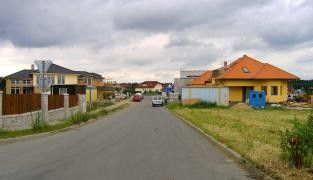
A clear conclusion follows from the above. For a reasonable return on investment, it only pays to build an optical cable network in places where you can connect several hundred households. Depending on the price and commercial success of sales, the economic payback period is around ten years. A longer payback period is rare and most often combined with some other investment. The biggest barrier to building fully optical networks in small municipalities, or in estates of family houses, is cost. That is why it is also necessary to rely on wireless technologies, which, however, are developing very rapidly.
Updated 15 April 2024