What is the Internet of Things (IoT) and how can it improve your life?
21. 5. 2020
Over the last few years, a lot of encouraging news has emerged about the Internet of Things (IoT). Many people and businesses see a great opportunity in this area for new innovations, investment and production. Some online shops already offer products based on the IoT concept (think smart washing machines, televisions, watches, alarms and so on). We often hear that this is the most advanced technological concept of recent decades, with the potential to change the basic way we manage our work and our lives.
We hear about this new era of "connection" in almost any context – smart homes, smart cars, smart appliances and even smart businesses and cities. Judging by current developments and forecasts, it is unlikely that any area of our working or personal life will remain untouched by this progress in the future. But what exactly is meant by this "connection"? The English term "connected experience" describes it well. This concept presents the modern consumer with an unprecedented amount of comfort and benefits that come with living with smart technologies that have their own internet connection (in English, "smarter living").
Thanks to various technology fairs and media that often write about IoT, the general public is learning faster and general awareness of IoT is growing. As a result, consumer expectations are rising, so technology innovators find themselves under ever greater pressure to meet their growing demands. The interplay of demand and supply means that the IoT market has been growing steadily and dynamically over the long term. The magazine Forbes predicted that as early as 2020 it would reach a volume of USD 267 billion. Let's now take a brief look at several IoT trends that already affect our everyday lives.
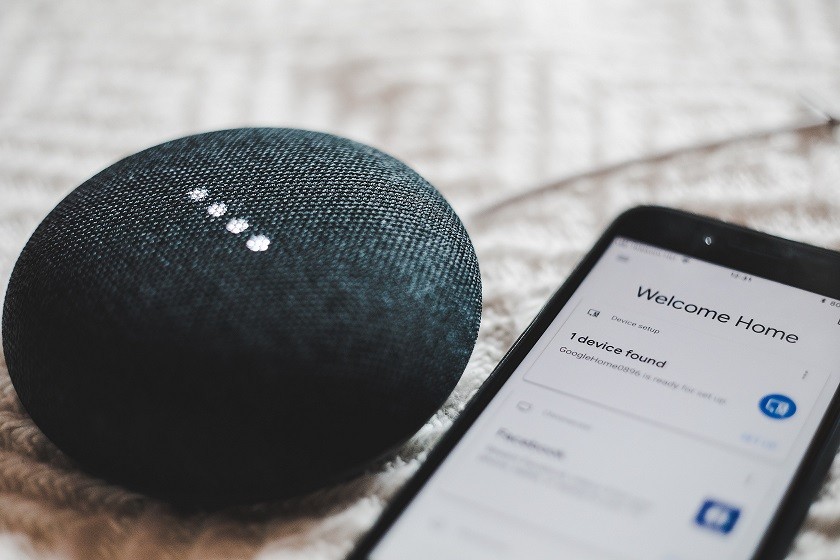
Smart electronics
Consumers used to be accustomed to their smartphones being equipped with internet, whereas today they expect every device they use to be connected to the internet. TVs, fridges, speakers, thermostats, home security systems – basically anything you can think of. Manufacturers naturally want to profit from this interest, so they are launching devices we have long known and used, but which are now fitted with a network chip and software that lets them communicate over the internet. The internet age thus pushes its boundaries a little further once again.
Smart healthcare
In connection with smart electronics, we cannot overlook the rise of so-called wearables for health or fitness purposes. These devices, which often take the form of watches, bracelets or headbands, can monitor your vital functions, such as heart rate, sleep cycle and calories burned. They can then send the collected data to an app that evaluates your health, or directly to your treating doctor. The information obtained helps you decide when it is time to rest after a demanding workout, or when to visit a doctor if some readings deviate significantly from normal.
And what about having artificial intelligence in healthcare? Forbes covered this in > Artificial intelligence is taking over healthcare: an opportunity, or a threat?
Smart homes
IoT is by no means limited to individual devices that are smart and connected. The same concept is also spreading to entire homes. A smart home collects useful data and is equipped with many smart appliances in almost every room, from the kitchen through the living room and the children's room to the bathroom. Household equipment is accessible online and can be controlled through apps on a mobile phone or tablet, or via a web browser. You just need to enter your login details and you can, for example, check whether you forgot to switch off the air conditioning or to lock the garage when you left. That alone saves a lot of time compared with going back to check everything in person. If manufacturers' imagination is creative enough (and it certainly will be), your home lighting may not only switch on by itself when you open the front door, but also choose a suitable colour scheme according to the time of day. Meanwhile, the coffee machine is already heating the water for your coffee.
Smart cars
Many prototypes of self-driving vehicles have already been built and successfully tested. Manufacturers such as Tesla and Volvo have even committed to making such cars available to ordinary consumers. A complex network in which vehicles, drivers and various parts of the transport infrastructure communicate with one another promises not only a more pleasant driving experience, but should also help determine the direction of development of this infrastructure, for example in traffic management and the management of car parks. Although self-driving cars were until recently not far from reality, today we can say with certainty that they are part of today's reality. Still, we will surely have to wait for wide roll-out, good affordability and a settled question of safety.
Smart city
Thinking big is possible in practically anything, and so the idea was born not to limit oneself to mere electronics, cars or houses, but to make an entire city smarter. Starting with the management of public services such as water, waste, electricity and gas, through to public administration such as public safety and transport. It should be added that governments and city councils are certainly not turning their backs on similar ideas – on the contrary, many of them have already officially declared their long-term commitments on the path to building smart cities. The smart revolution of a city will most likely affect its residents slowly and almost imperceptibly, because its primary aim is more efficient use of energy, materials and human resources.
TIP: We have written an article on this topic: Smart city: What smart cities are
Smart agriculture
Increasing food production is a challenge of our time. The UN states that for the growing population to be fed without problems by 2050, food production must increase by 60%. This can be achieved by integrating the concept of smart technologies into agriculture. Here their primary role would be to help make correct, data-driven decisions, such as data on crops and weather, but also to monitor the condition of crops in real time and suggest optimisations of growing practices in order to achieve higher productivity.
Industry 4.0
This term describes future production in the era of the Internet of Things. It is a way to make the production and supply chain smart, agile, efficient and sustainable. In this paradigm, production resources such as machines and people will communicate intelligently and, based on data inputs, will be able to make proactive production decisions. One example is predictive maintenance of machines, which is a great opportunity to reduce costs and strengthen operational efficiency.
Final words
IoT is becoming ubiquitous. It is designed to touch and change practically every aspect of our lives so far. To make this truly feasible, it is important to deal not only with the positives we have briefly presented, but above all with the negatives, such as concerns about security. Nevertheless, this sensitive question must be resolved by every business, regulator or public administration that wants to get involved in IoT in any way.
The development of the Internet of Things has enabled reliable networks and providers of electronic communication services to develop. In modern networks that meet the quality parameters of next-generation networks, such as uvtnet.cz, you can really bring the environment around you into the 21st century.
Author: Lukáš Beňa, Jakub Moník
Updated 16 February 2024
You might also be interested in
3. 9. 2026
How the internet works: what happens between pressing Enter and a loaded page
Whole article









22. 5. 2020